

The Adaptive Graphic Designer
In August, I gave a talk at Pixel Blue College called The Adaptive Graphic Designer, focused on how the role of a graphic designer is changing and what that means for designers entering the industry today.
The central idea was simple: design turns complexity into clarity.
We often talk about graphic design in terms of what we make — identities, campaigns, websites, packaging, illustrations, social content. But underneath all of those outputs is the same fundamental job: taking information, ideas and problems and making them easier for people to understand and engage with.
And as the industry becomes more complex, I think that ability becomes even more valuable.
The tools available to designers have never been more powerful. Adobe, Canva, Figma, generative AI and countless other platforms can help us produce work faster than ever.
But faster execution doesn't automatically create better design.
The tool can help generate the image, build the layout or create variations. The designer still has to decide what should be made, who it's for, why it matters and whether it's actually working.
That distinction is becoming increasingly important. Knowing how to use the tools is part of the job. Knowing what to do with them is where the real value lives.
One of the biggest shifts in my own career was realizing that becoming a stronger designer didn't necessarily mean becoming faster in Illustrator or better in Photoshop.
It meant understanding more of the world surrounding the design.
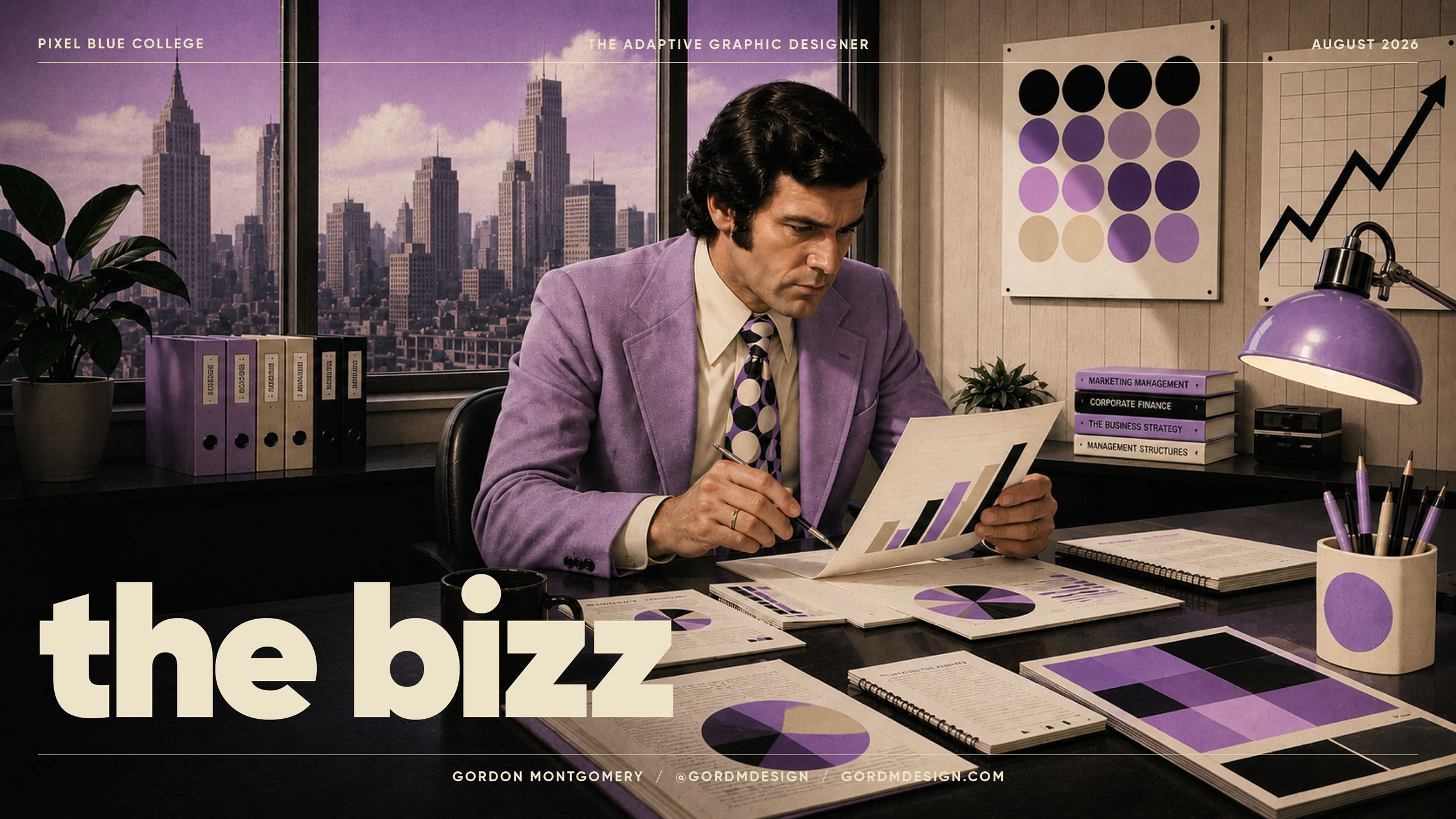
Business objectives. Audiences. Strategy. Budgets. Production. Marketing. Clients. Collaboration. Presenting ideas. Explaining decisions.
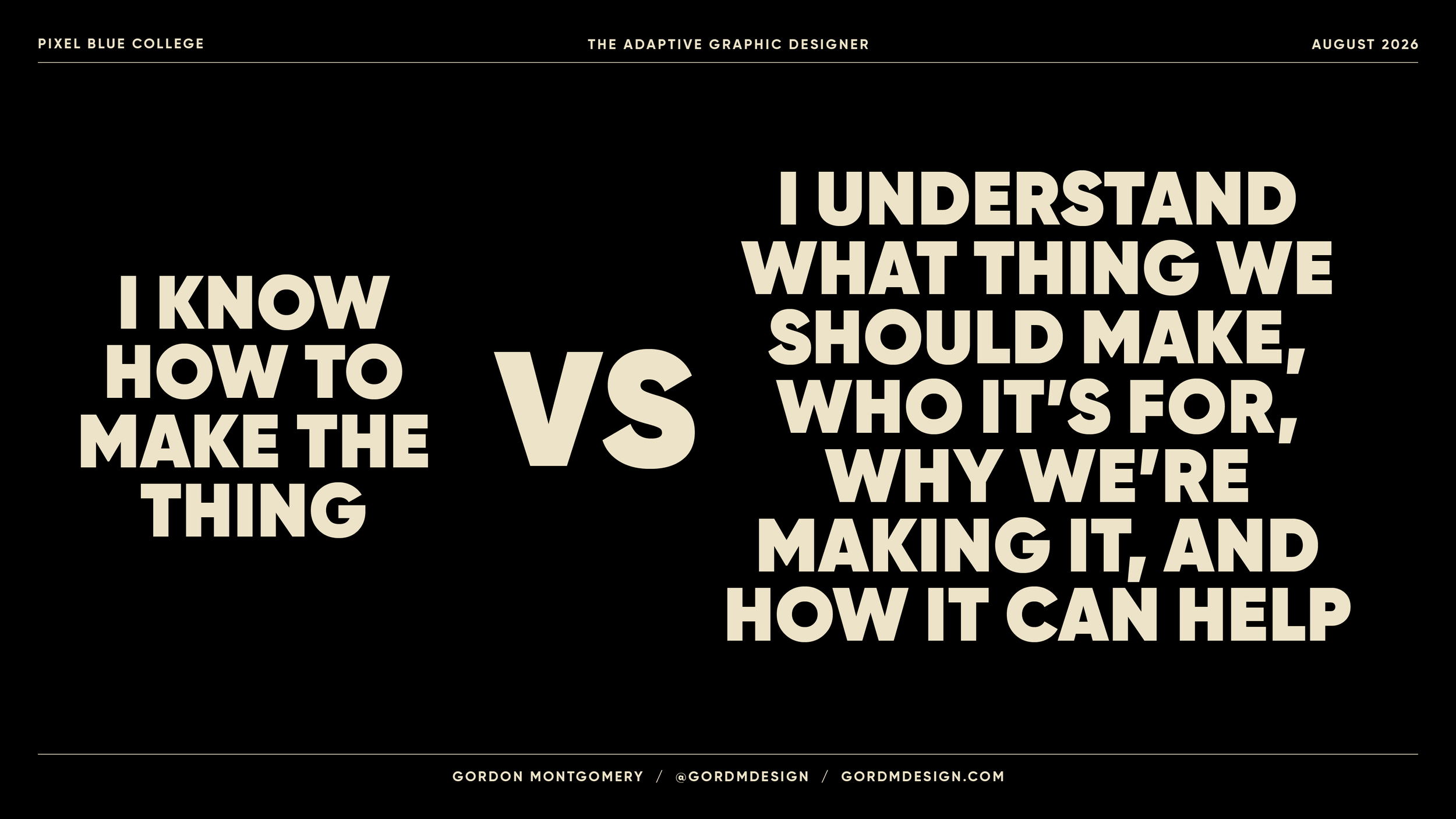
There is a big difference between saying “I know how to make the thing” and being able to help determine what thing should be made in the first place.
The more context you understand, the more useful you become — not just as someone executing an idea, but as someone helping shape it.
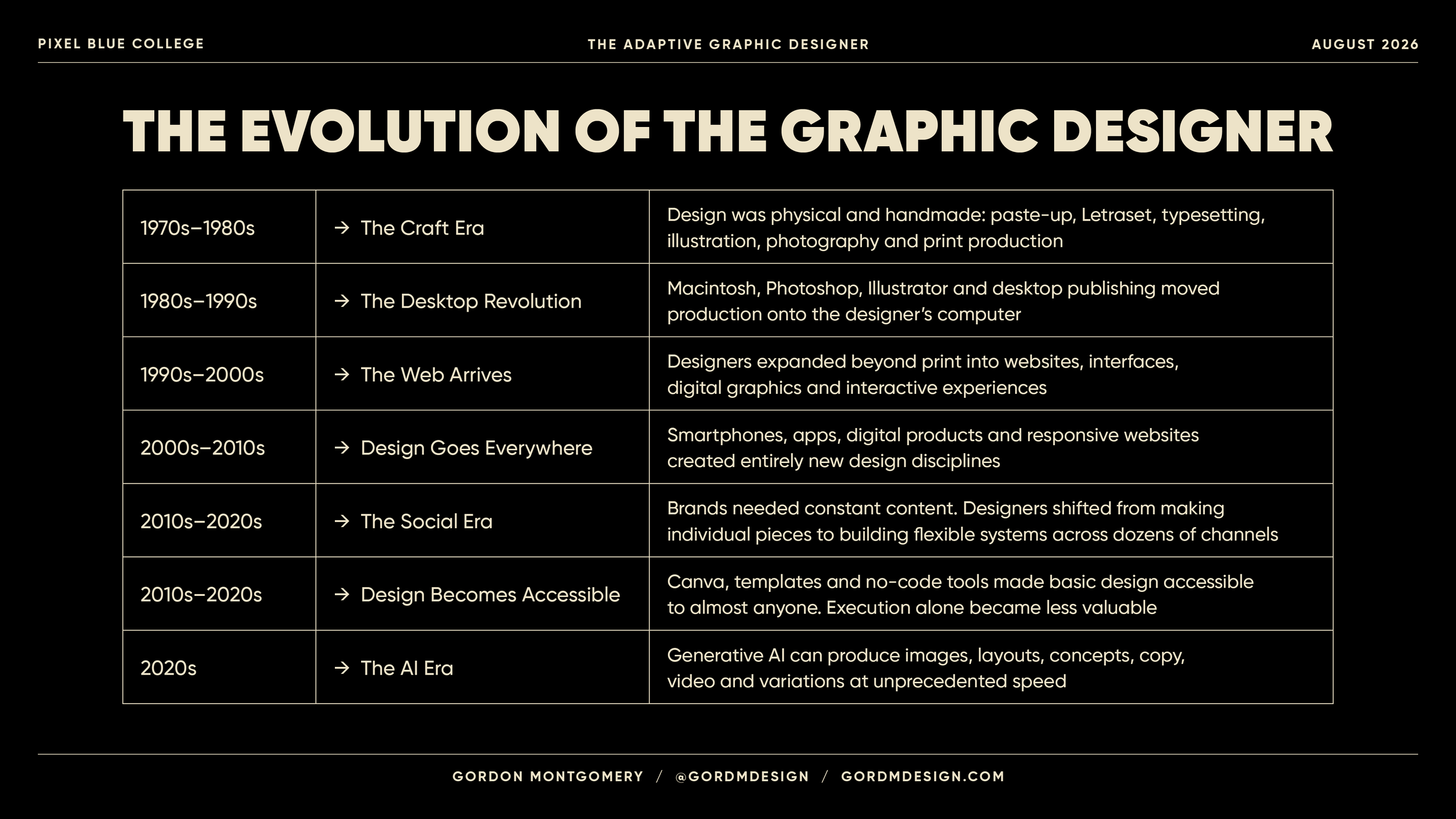
Graphic design has always adapted.
Designers moved from physical paste-up and typesetting to desktop publishing, then websites, digital products, social platforms, templates and now generative AI. Every major technological shift has changed parts of the job.
And yet the designer didn't disappear.
Instead, the role expanded.
That's why I don't think there is one perfect path anymore. A designer might move deeper into craft, into art direction, strategy, motion, digital experiences, illustration, creative technology, leadership — or build a practice somewhere between several of them.
The important part isn't trying to learn everything. It's developing the ability to adapt as the work changes.
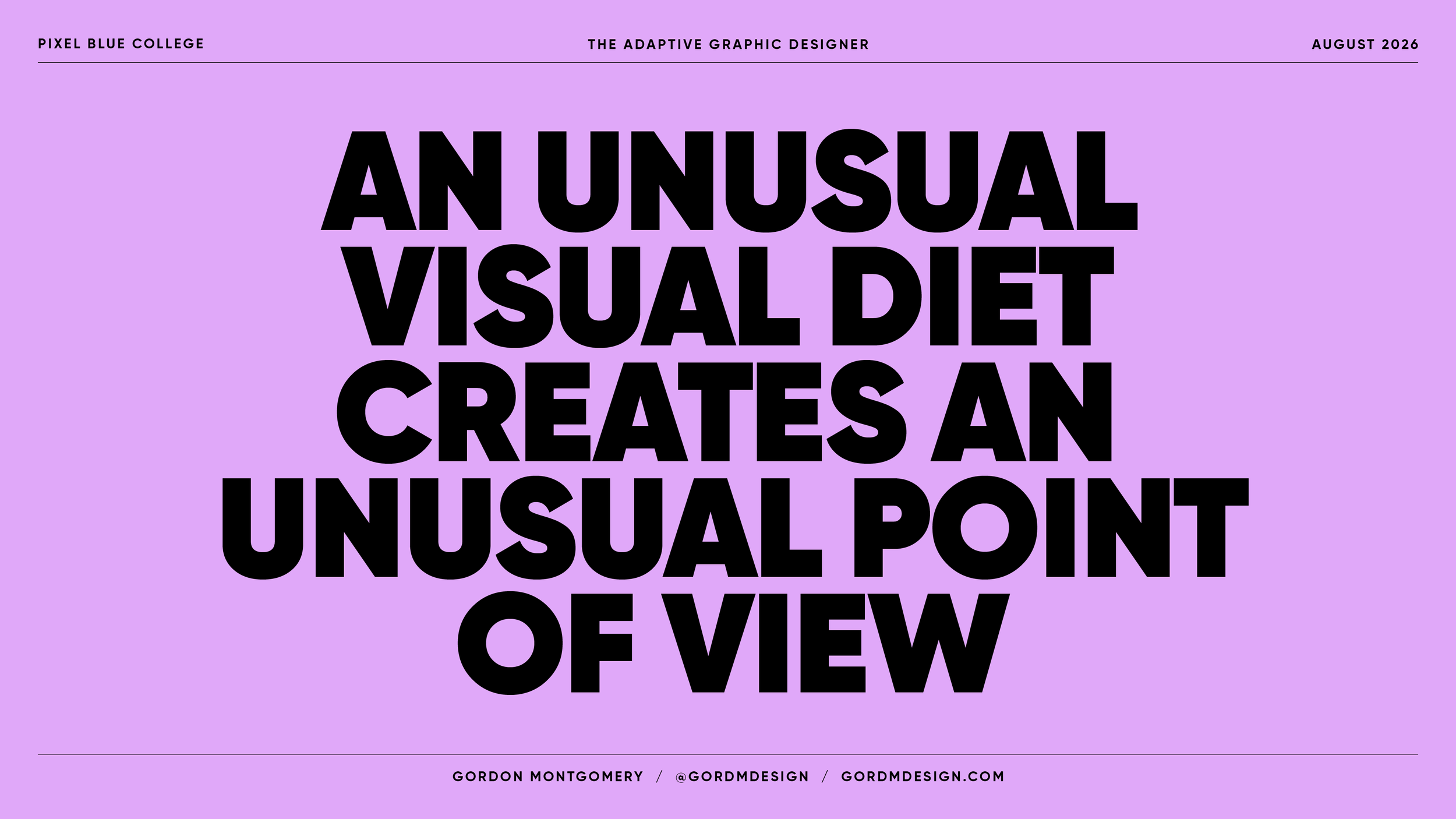
Adaptability doesn't mean becoming generic.
In fact, as tools make it easier for everyone to produce competent-looking work, having a distinct point of view becomes more important.
What you look at matters. The designers you study, the music you listen to, the films you watch, the places you go, the books you read and the things you're curious about all become ingredients in your creative work.
If everyone consumes the same references, follows the same trends and uses the same tools, it's easy for everything to start looking the same.
Feed yourself different things.
Your taste is part of your toolkit.
So where do designers go from here?
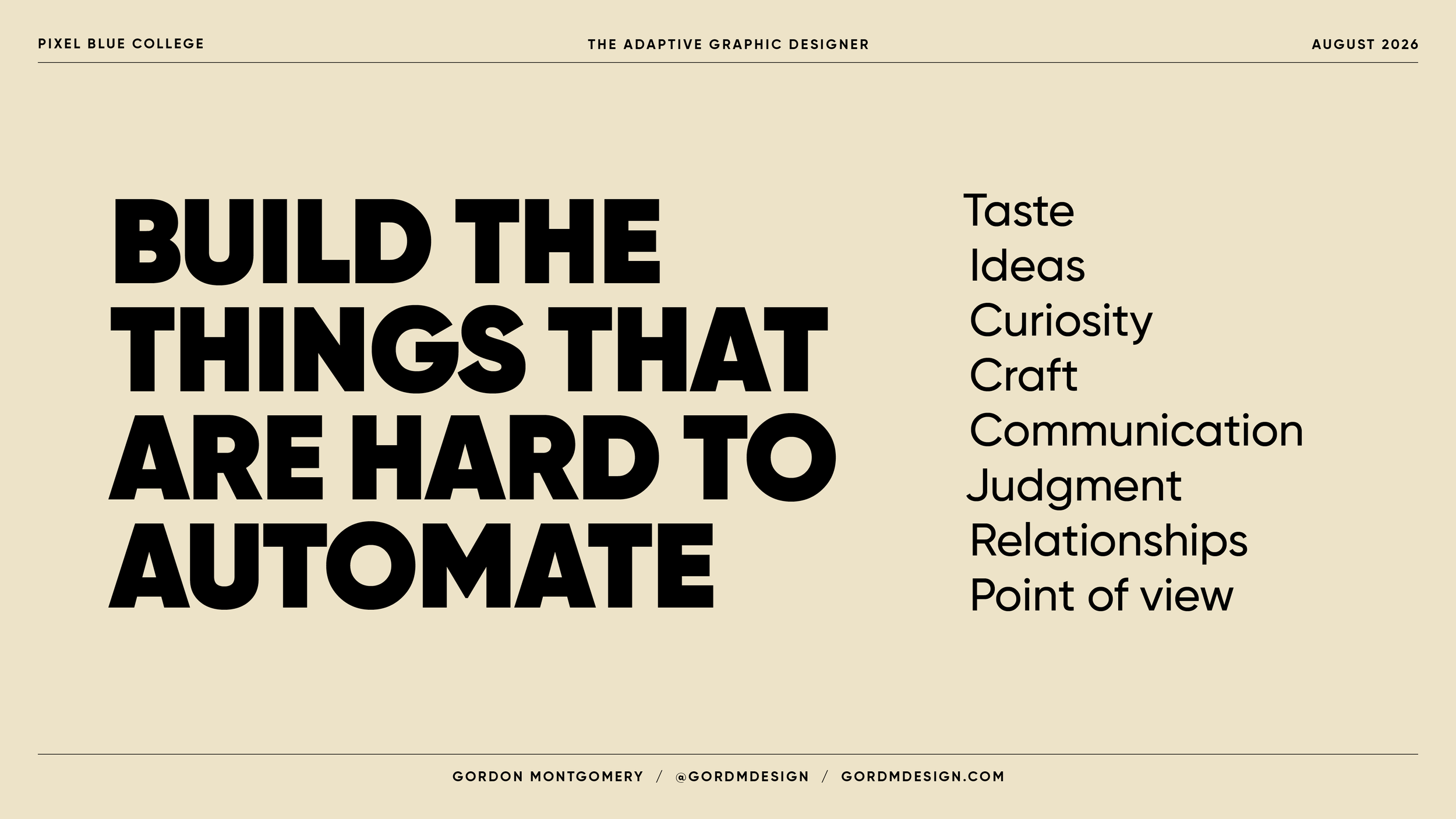
For me, the answer isn't trying to compete with technology at the things technology does best. It's continuing to strengthen the things that are much harder to automate.
Taste. Ideas. Curiosity. Craft. Communication. Judgment. Relationships. Point of view.
These aren't separate from design skills. They're the things that make those skills useful.
Software will change. Platforms will disappear. New tools will arrive. Production methods will continue getting faster.
Your ability to recognize a good idea, understand another person, make a judgment call, communicate clearly and develop a point of view can travel with you through all of it.
That's ultimately what I mean by The Adaptive Graphic Designer.
It's not about becoming a designer who does everything.
It's about building a strong foundation in design while staying curious enough to expand beyond it. Learn the tools, but don't define yourself by them. Understand the craft, but also understand the problem. Develop your taste, learn how businesses work, communicate your ideas and keep adding new capabilities as the industry changes.
We can't know exactly what the graphic designer's job will look like ten years from now.
But we can become the kind of designers who can handle whatever comes next.